
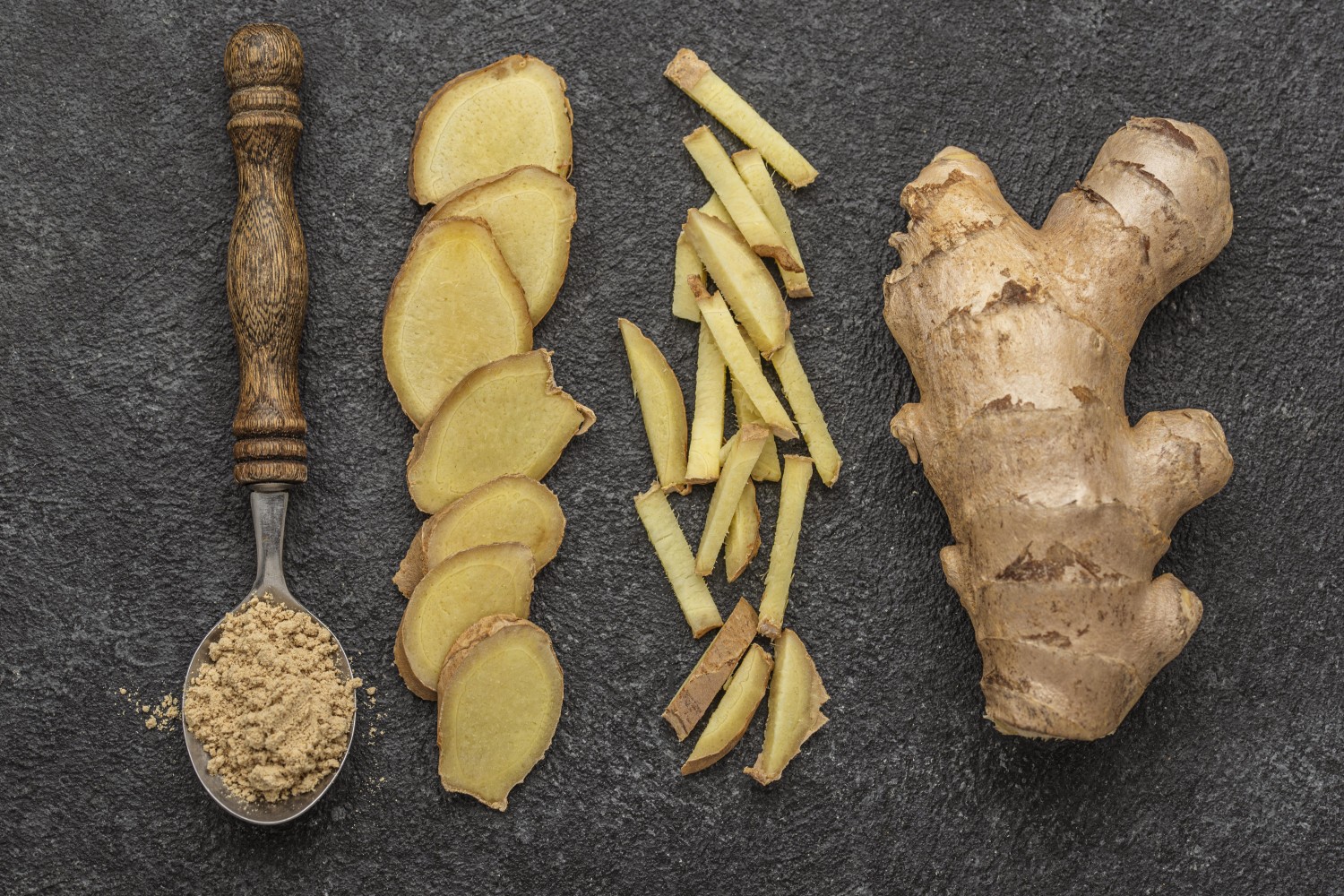
We all know ginger for its sharp taste and aromatic profile, but in Traditional Chinese Medicine (TCM), Sheng Jiang has been used for over 2,000 years as a powerful remedy. Today, science is confirming what ancient practices knew all along.
A Root with Ancient Origins and Ongoing Research
In TCM, ginger is described as warm, spicy and dynamic, traditionally used to:
Disperse internal cold
Support digestion
Stimulate Qi (vital energy) flow
Modern science now reveals similar effects at the biochemical level.
What the Science Says
Researchers have identified over 100 bioactive compounds in ginger. Among the most relevant:
Gingerols – antioxidant and pungent
Shogaols – stronger compounds formed by drying
Zingerone – sweet and aromatic, formed by cooking
These correspond precisely to TCM classifications:
Sheng Jiang (fresh ginger) → dispersing
Gan Jiang (dried ginger) → warming
Pao Jiang (toasted ginger) → astringent
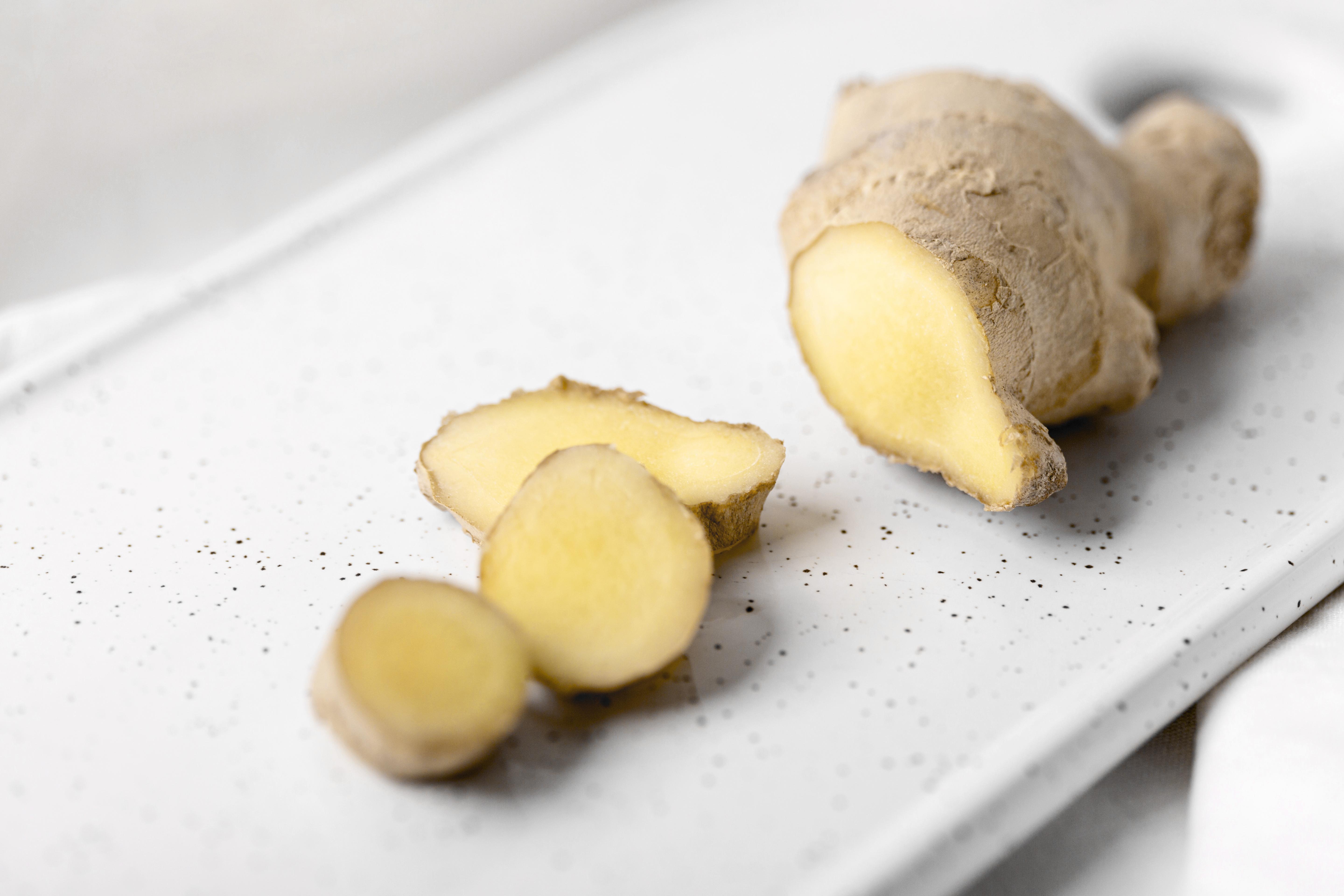
Two Perspectives, One Effect
Traditional Chinese Medicine | Modern Biomedical Science |
|---|---|
Tonifies Yang | Stimulates thermogenesis and energy |
Harmonizes Spleen and Stomach | Aids digestion and gastric motility |
Moves fluids and blood | Enhances microcirculation |
Dispels cold | Modulates inflammation |
Despite different approaches, the observed benefits overlap.
Ginger for Modern Wellbeing
Today, ginger is a go-to ingredient in:
Functional teas and energizing shots
Anti-inflammatory smoothies
Digestive supplements and detox blends
Nutraceutical and wellness formulations
Natural, versatile and scientifically validated, it bridges tradition and innovation.
TCM-Inspired Ginger Tea Recipe
Ginger and Chinese Red Sugar Tea (薑紅糖水 · Jiāng Hóngtáng Shuǐ)
Ingredients:
5–6 slices of fresh ginger
1 tbsp Chinese red sugar (hóngtáng)
300–400 ml of water
Instructions:
Boil the water
Add the ginger and simmer for 10 minutes
Remove from heat and stir in the sugar
Traditionally used to warm the body, activate blood circulation, and ease menstrual discomfort caused by cold stagnation.
Conclusion
Ginger is a perfect example of how ancient tradition and modern science can align. An old-world root with new-world relevance.
Would you like to know more?