
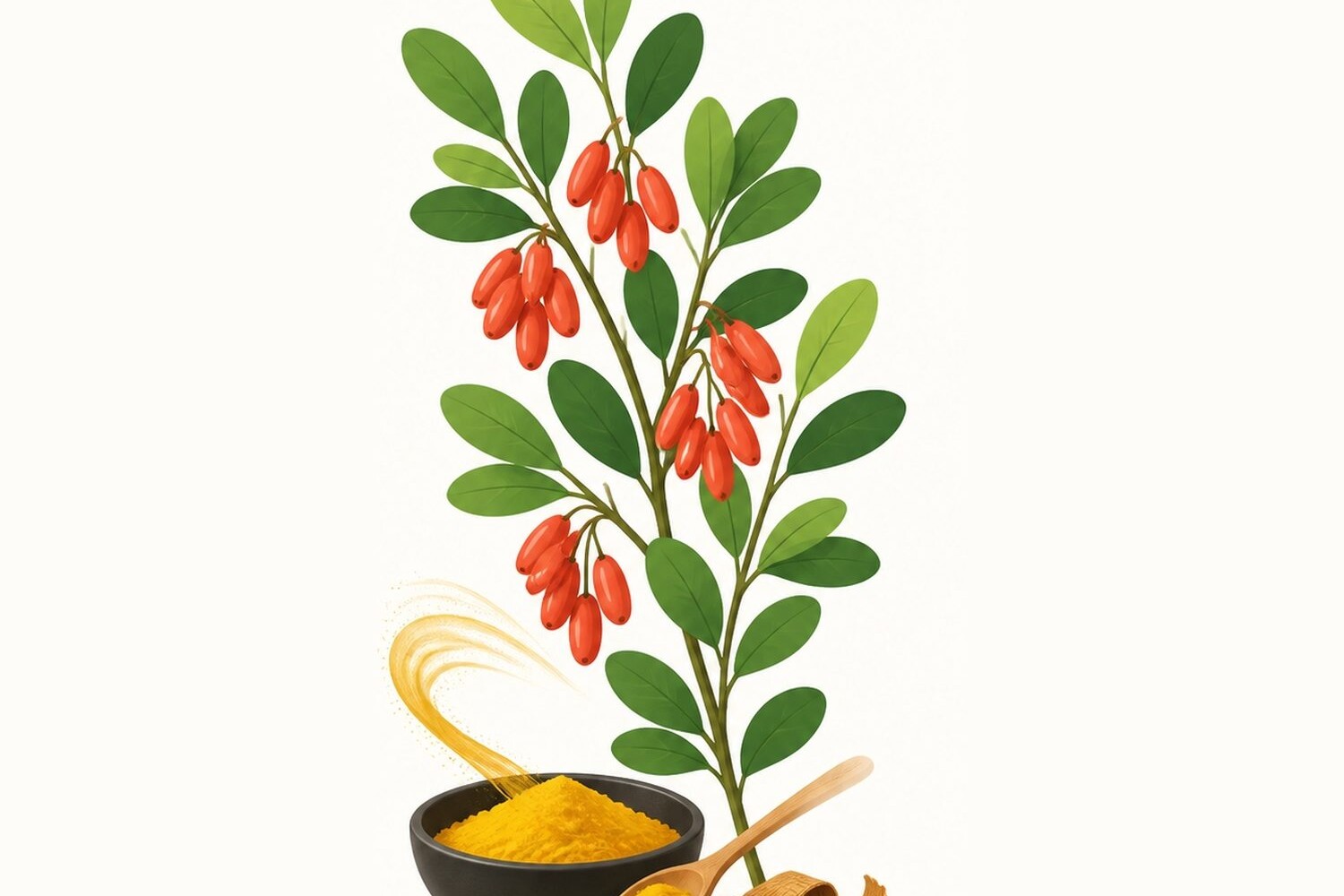
Berberine is under review by EFSA. The Foundation for Botanical Research is gathering the data to defend it: we at Carlo Sessa are on board. Are you?
A widely used substance under assessment
Berberine is a natural alkaloid found in several plant species, most notably those of the genus Berberis, and it has become one of the most widely used ingredients in food supplements. That is precisely why the European Food Safety Authority (EFSA) is now assessing its safety.
To fill the data gaps, EFSA is asking for evidence on any adverse effects of berberine, data on related substances occurring in the same plants, and information on the safety of the plant preparations as a whole. Much of that data does not yet exist.
The Fondazione Botanica per la Ricerca (FBR), the Foundation for Botanical Research set up earlier this year by SISTE, Assoerbe and Integratori & Salute, has taken on the task of producing it. We covered its launch in January; berberine is one of its first real tests.
Risk is not hazard
The project rests on a distinction at the heart of international risk assessment, set out by Prof. Corrado Lodovico Galli, chair of the Foundation’s Scientific and Technical Committee.
Hazard is a substance’s intrinsic ability to cause harm; risk also depends on how much of it a person is exposed to, and how. A potentially hazardous substance can therefore be safe when taken within limits set by combining hazard data with exposure data. It is the old principle that “the dose makes the poison”.
The assessment follows four steps:
- hazard identification — which adverse effects may occur;
- dose-response assessment — at which amounts those effects appear;
- exposure assessment — how much of the substance people take in, including vulnerable groups such as the elderly and pregnant women;
- risk characterisation — combining hazard and exposure to define safe conditions of use.
Safe intake levels are derived by applying safety margins to the dose showing no adverse effects (the Point of Departure, formerly the NOAEL), allowing for differences between species and between individuals.
Weight of evidence
To answer EFSA, the Foundation is taking a weight-of-evidence approach, bringing different sources together to reach reliable conclusions even when the data are complex:
- in vivo — studies following OECD guidelines and good laboratory practice (GLP);
- in vitro — validated studies on cell cultures or biological models;
- in silico — computational models (SAR/QSAR, read-across, PBK models), which also make it possible to compare botanical mixtures with their individual components.
The studies will focus on the points EFSA has flagged: identifying the plant species used to make berberine preparations and characterising those preparations, and evidence of adverse effects for berberine, the other protoberberines and the plant preparations as a whole, starting with genotoxicity and subchronic toxicity studies.
All tests will be run on a single batch of high-titre Berberis spp. extract (95–97%), free from carriers such as cellulose or maltodextrins, and on a whole-plant preparation, both fully characterised.
First steps
The Foundation has already commissioned two in vitro assays from Toxys laboratories in the Netherlands: ToxTracker and ReproTracker, cell-based models that measure the biological response to berberine exposure and will give a first indication of hazard. Both are in the final stage of OECD validation, and their cost is covered by the Foundation.
For the studies that follow, quotes have been requested from the few EFSA-accredited test facilities. Testing will proceed step by step, according to the results obtained and the resources available.
The timeline is workable: according to the Foundation, the European Commission may well place berberine and its preparations in Part C of Annex III to Regulation (EC) No 1925/2006, the list of substances under Community scrutiny, at the risk-management stage. That would leave enough time to complete the tests and publish the results in high-impact scientific journals.
Why we are on board
Regulatory decisions must rest on solid evidence, and solid evidence is expensive: studies of this standard are beyond the reach of any single company. That is why the project relies on fundraising coordinated by the Foundation, with costs shared across the industry. It is the way to protect the whole supply chain, from raw material to finished product.
Carlo Sessa has worked with berberine for years, from Berberine LEO-HB® to ToBeRocK, our patented technology combining berberine and tocotrienols. Supporting the Foundation’s project is the most direct way to stand behind an ingredient our customers use every day.
Would you like to know more? Get in touch.