
From correcting the signs of age to helping skin adapt: the new frontiers of well-ageing.
Beyond anti-ageing
For years anti-ageing skincare has worked by subtraction: fewer wrinkles, fewer spots, less loss of firmness. An effective approach, but one that looks mostly at the effects of ageing and much less at its causes.
Well-ageing changes the question. Not just “how do I correct the visible signs?”, but “how do I help the skin keep its ability to defend, repair and adapt over time?”. It is the same shift that medicine and nutrition call longevity: extending the time an organism works well, rather than chasing the symptoms of decline.
The stress that strengthens
A key idea behind this approach is that not all stress is harmful. A moderate stimulus — a limited level of oxidative stress, for instance — can trigger adaptive responses that strengthen the cell’s defences: the same principle by which training makes muscles stronger.
The problem starts when aggressions keep coming: UV, pollution, lifestyle. At that point the adaptive mechanisms run out of steam, and the skin gradually loses its ability to repair and regenerate. Working on resilience means supporting those very mechanisms before they give way.
Exosomes: the language of cells
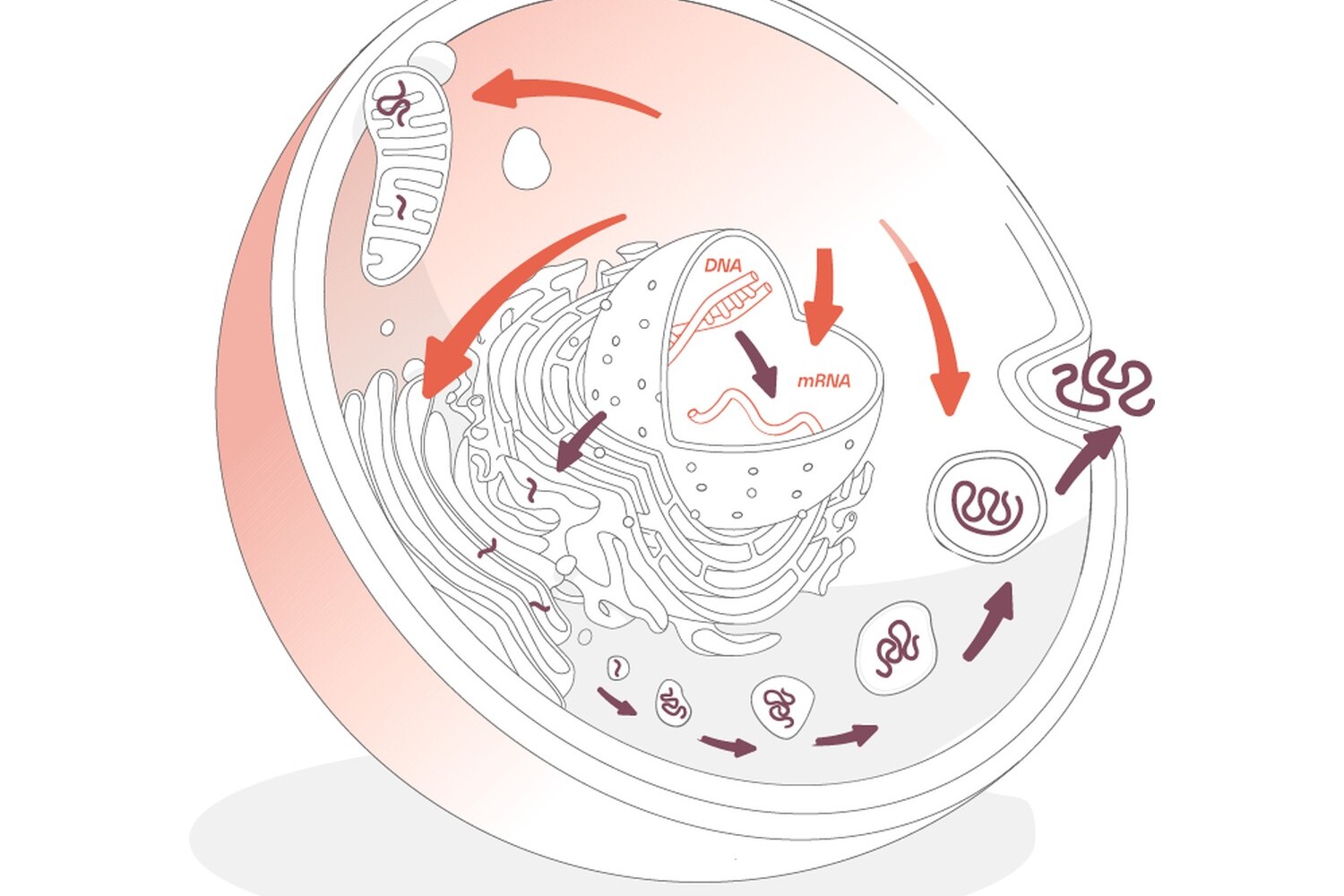
Cells do not live in isolation: they constantly exchange information. One of the main channels is exosomes, nano-sized vesicles that carry proteins, lipids and nucleic acids from one cell to another, changing their behaviour.
Plants produce exosomes too, and use them to coordinate their response to environmental stress. This is where the cosmetic interest comes from: a plant-exosome active does not bring the skin a single molecule but a complex biological message, in a biomimetic approach.
SUMOylation: a switch for adaptation
Inside the cell, many stress responses rely on small changes made to proteins after they are synthesised. One of them is SUMOylation: the attachment of small proteins called SUMO (Small Ubiquitin-like Modifier) that changes the activity, location or stability of the target protein.
SUMOylation is a fast, reversible mechanism involved in chromatin organisation, DNA repair and mitochondrial function: in short, in the cell’s ability to adapt to what happens around it. That makes it an interesting target for skincare that aims to act on epigenetic regulation rather than on visible signs alone.
Why plant cell cultures
Obtaining exosomes from whole plants would be hard to control and hardly sustainable. Plant cell cultures allow steady production, independent of seasons and climate, with no farmland, pesticides or fertilisers and far less water. As an order of magnitude, Naolys cites 12,000 litres of water for 1 kg of distilled rose essential oil, against 1.25 litres for 1 kg of its own rose active from cell culture.
A concrete example: Aethelis Granata
On these principles Naolys has built ExoCell®, a platform producing exosomes from a bank of more than 70 plant cell species, including bespoke ones for individual brands. The first active born from the platform is Aethelis Granata, based on pomegranate exosomes — a plant that symbolises resilience through its drought tolerance.
Aethelis Granata modulates SUMOylation in keratinocytes and, through them, also stimulates dermal fibroblasts. It is used from 0.5%, with anti-wrinkle, regenerating and hydrating benefits documented by clinical and in vitro tests. We covered its launch in Aethelis Granata: the future of skincare has botanical roots.
The takeaway
Well-ageing does not replace anti-ageing: it completes it, shifting the focus from the visible result to the mechanisms that make it last. Plant exosomes and epigenetic regulation are two of the tools skincare is using to turn this idea into real formulas.
To follow the research step by step, Naolys explains the science behind ExoCell in its Science Series on LinkedIn.
Want to evaluate it in formula? Mechanism of action, benefits and use guidelines are on the Aethelis Granata product page. Our specialists are on hand for the technical dossier, samples and formulation support.
Credits: Naolys illustration